
Companies that have placed their trust in us:

























How we can help
We take on the whole job, from checking whether you have the obligation at all to submitting the documentation.

We check whether you have the obligation
We review your ownership structure and transactions and determine whether you exceed the threshold set by law.
We analyse transactions between your companies
We go through every related-party transaction and establish how the price was set.
We prepare the transfer pricing report
A document that describes your actual business, the method applied and the reasons for choosing it.
We recommend any correction to the tax return
If the study/report shows that the tax return needs to be corrected, we recommend how to amend it.
We give guidance for future transactions
We tell you how to set up future intra-group transactions so they don't need explaining after the fact.
Who it is intended for
The report is an obligation for companies that do business with related parties. In practice, these are the most common situations.
The owner has several companies that do business with each other
The company is part of a group in BiH or abroad
The company is partly or wholly owned by a foreign legal entity
Money is lent between related companies or by the owner
Goods or services are bought from a family member's company


What you get
At the end of the engagement, you have documentation ready for submission and a clear picture of where you stand.
Transfer pricing report
A document based on your actual business, with a justified method and conclusion.
A tax return aligned with the conclusions of the Study/Report
The conclusions of the Study/Report must be accurately reflected in the tax return.
Guidance for future transactions
How to set up future intra-group transactions so they don't need explaining after the fact.
Review of risky transactions
We tell you which transactions could be disputed and why.
What we need from you
You don't need to prepare anything in advance. After the first conversation, you get an exact list, and it usually includes the following.
Information on the ownership structure and related parties
Financial statements for the year the report covers
An overview of related-party transactions
Contracts and documents relating to those transactions

Does this apply to you?
The obligation arises when two conditions are met.
You do business with a related party.
Parties are related when one participates directly or indirectly in the management, control or capital of the other. The threshold is 25 percent of shares, voting rights or rights to profit. Parties can also be related through family ties, which the law counts up to the third degree of collateral kinship.
Total transactions exceed BAM 50,000 in the tax year.
This amount includes everything, including credits and loans between related parties.

This is where companies most often go wrong, in two ways. They think only invoices count, so they forget about loans. And they think related parties are only companies in the same group, so they forget about a family member's company.
If you're not sure where you stand, a check is the first step in every engagement we take on.
clients
transfer pricing reports
reply to every enquiry
Why a report is not a template
A report with your name on the cover and generic text inside looks like finished work. The difference only shows when someone reads it carefully.
What working with us looks like
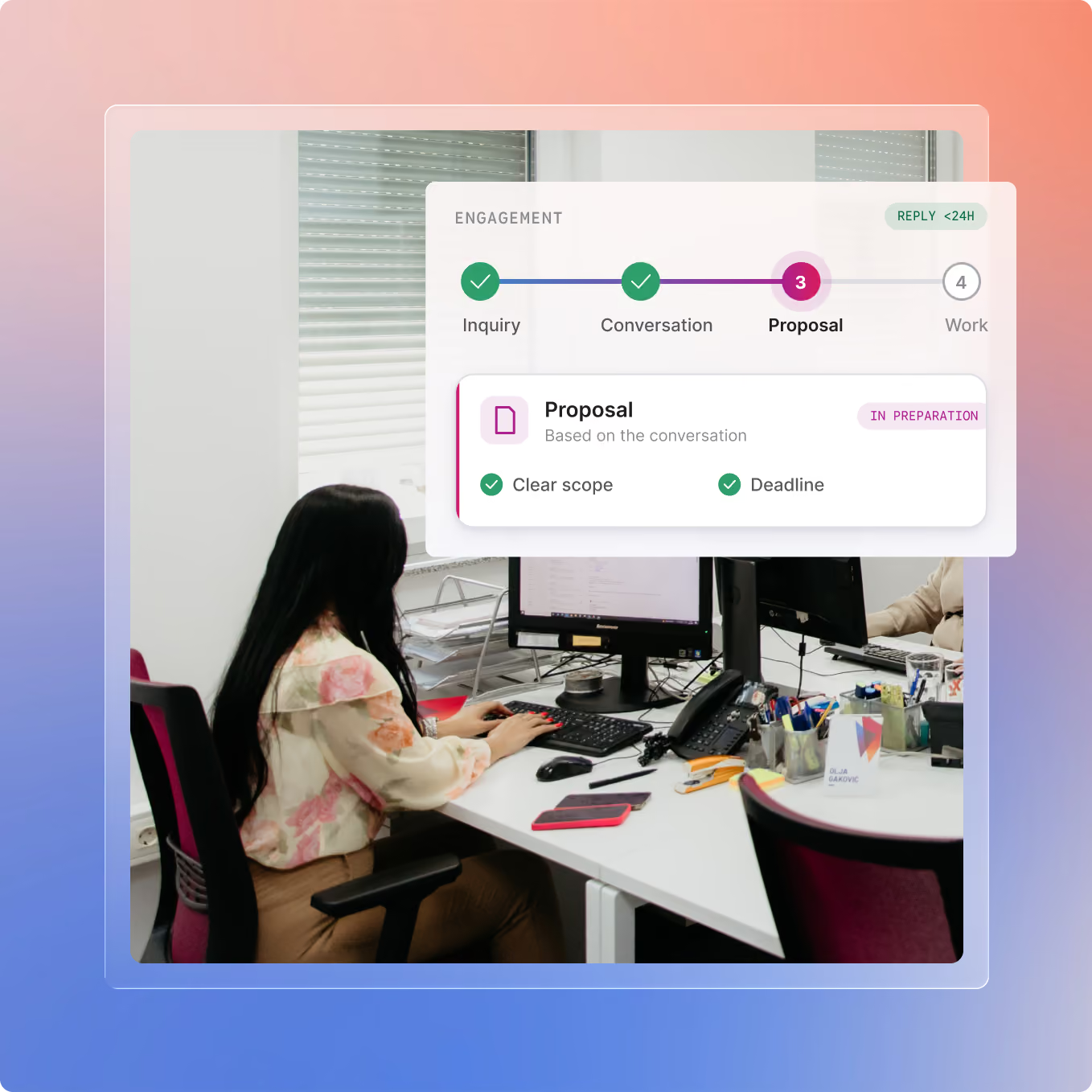
From the first enquiry to the finished job, in four steps.
Enquiry
Get in touch through the form or by email. We reply within 24 hours.
Conversation
Talking it through gives us the full picture of your business, so we can see exactly how we can help.
Proposal
Based on our conversation, we prepare a proposal with a clear scope of work and timeline.
Work
We agree on documents and deadlines, then get started.
What you need to know about transfer pricing
What companies most often ask before they start.
What is transfer pricing?
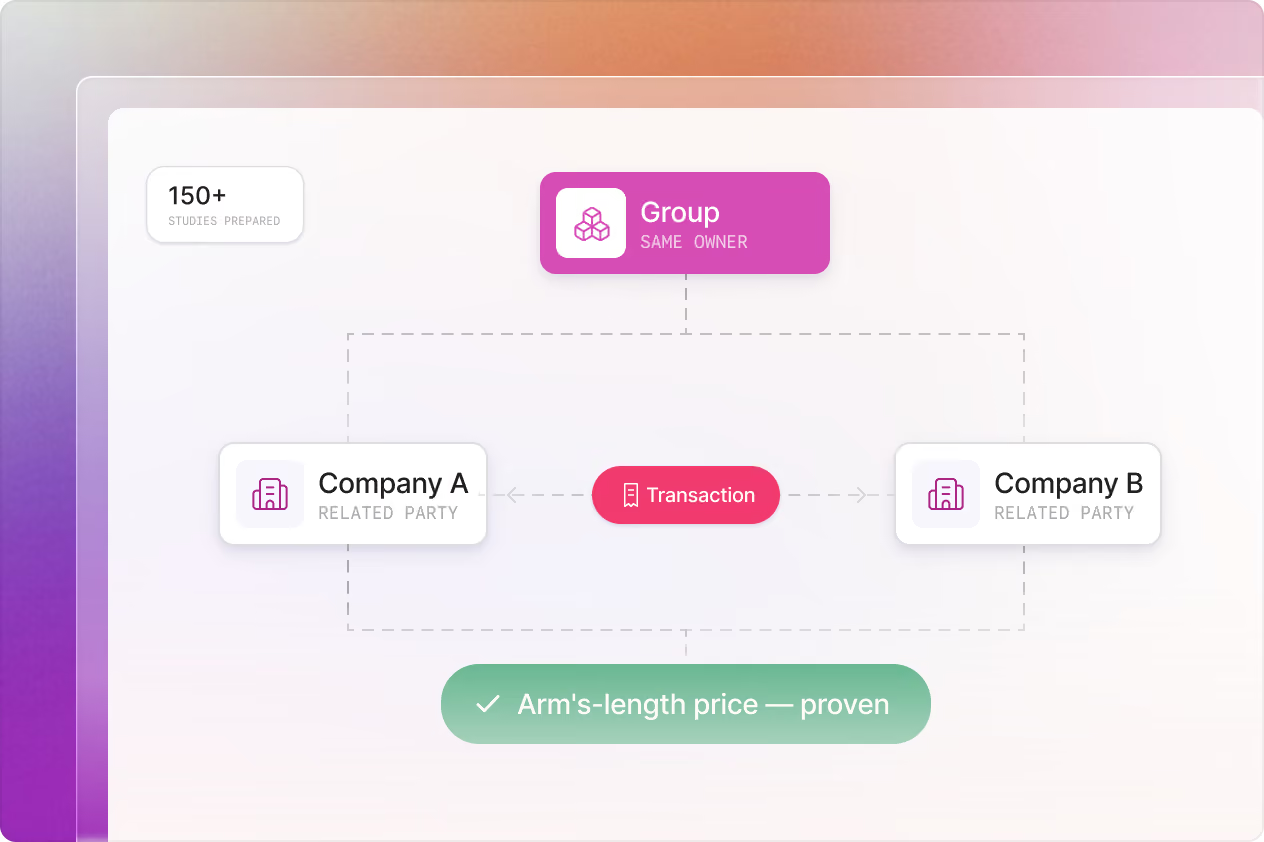
These are the prices in transactions between related parties. When both sides belong to the same owner, the price isn't set by negotiation. That is why the law requires the price to be at the level that would apply if you were dealing with an unrelated company. This is called the arm's length principle.
What does the report contain?
Information on the related parties and their roles, an overview of all transactions during the year, the chosen method with a justification, the analysis and the conclusion. The law prescribes five methods, and another may be applied if none of the five fits the circumstances.
What is the submission deadline?
Ideally, you should have the transfer pricing report when your financial statements and tax balance, i.e. your corporate income tax return, are prepared and filed, which is 28 February and 31 March of the current year for the previous year. The Law also requires the report to be submitted to the competent inspector within 30 days of a request, and in any case the final deadline for preparing and submitting the transfer pricing report is 30 September of the current year for the previous year.
What are the fines?
BAM 20,000 to BAM 60,000 for a legal entity. BAM 5,000 to BAM 15,000 for the responsible person, paid from their own funds.
Do loans between my companies count as transactions?
Yes. From 2026, the law explicitly lists credits and loans as transactions that count towards the BAM 50,000 total.
Is a family member's company a related party?
Usually, yes. The law counts spouses, children, parents, brothers and sisters, relatives in the direct line without limit, collateral relatives up to the third degree and in-laws up to the second degree.
How long does it take to prepare the report?
It depends on the number of related parties and the type of transactions. You get an exact timeline in the proposal, after the first conversation.
Do you prepare reports for companies whose books you don't keep?
Yes. The report is prepared regardless of who does the accounting.
What if the Tax Administration doesn't accept the documentation?
It then determines the tax base itself, by increasing taxable profit or reducing recognised expenses. That is why the documentation must describe your actual business, not a general case.